
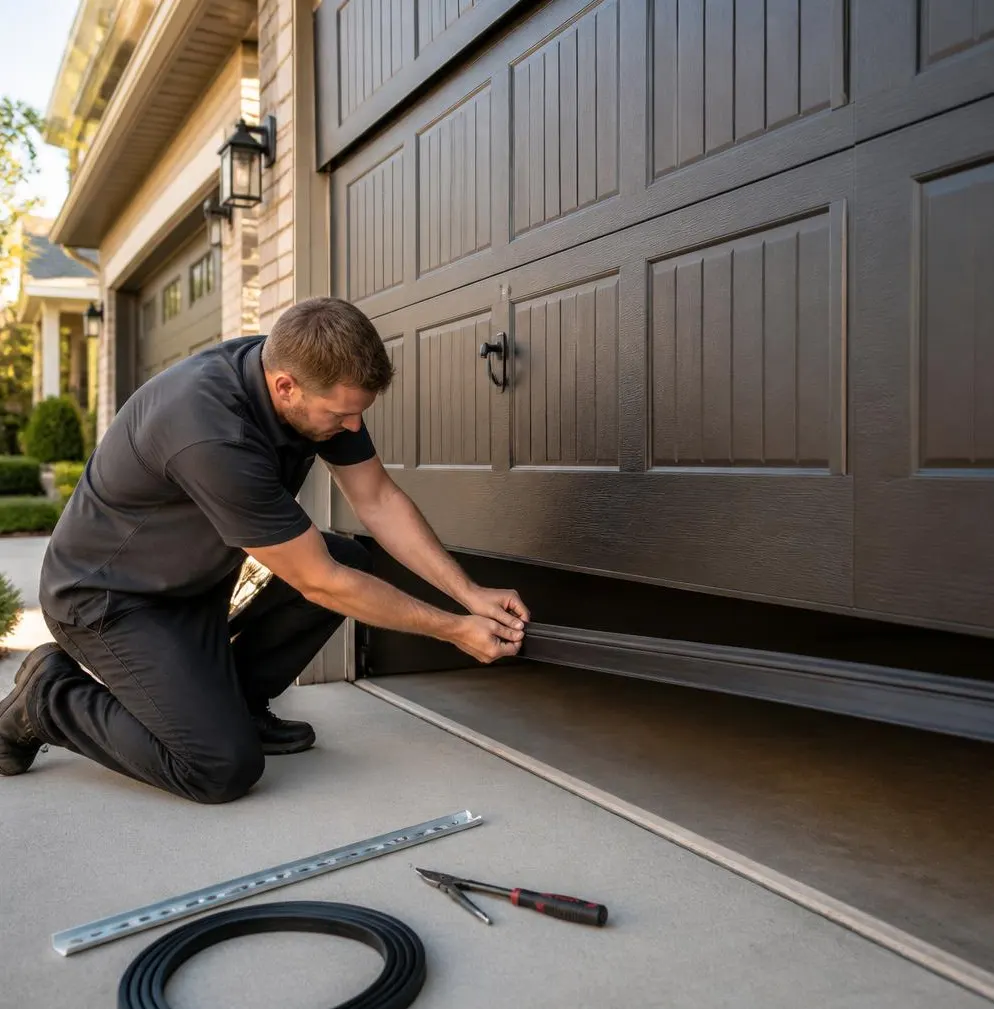
Short answer: you almost never have to remove the garage door to convert the space. In most cases, the smarter and cheaper move is to seal, insulate, and weatherproof the door you already have, and leave the option open to use the space as a garage again later. Tearing out the door and framing in a solid wall is possible, but it's a bigger, more permanent job than most homeowners realize — and it's rarely required just because you're adding a treadmill or a workbench.
Why This Argument Keeps Happening
One spouse wants a clean, finished room that doesn't look like a garage from the outside. The other wants to keep the door because it's useful — for moving heavy equipment in and out, for resale value, or just because ripping out a functioning door feels wasteful. Both sides have a point, and the right answer usually depends on how permanent the conversion is meant to be.
If the space might go back to parking a car or storing a mower someday, keeping the door intact and insulated is the lower-risk choice. If this is a true, permanent conversion — a finished home gym, office, or in-law space — removing the door and framing a wall can make sense, but it's a construction project, not a garage door project, and it changes the house's resale profile.
What Actually Happens to the Door in a Conversion
If You Keep It
The door stops being a daily-use door and becomes, functionally, a big insulated wall panel. That means:
- It needs real weatherstripping — the bottom seal, side seals, and the top seal where the door meets the frame. Gaps here let in drafts, dust, and moisture.
- It often needs insulation added if the original door is a single-layer steel or wood panel, which is common in older homes in this area with original, non-insulated doors.
- The track and opener hardware should either be disabled safely or left fully operational — a door that's rarely used but still wired to an opener can seize up or develop spring tension issues from disuse, especially through a Lancaster County winter.
If You Remove It
Framing in the opening means permanently losing drive-in access, which can lower resale appeal for future buyers who want garage space back. It's also a bigger job than it looks — you're dealing with structural framing, matching siding, re-flashing against water intrusion, and insulating the new wall to match the rest of the house. Compared to sealing and insulating an existing door, it costs significantly more and can't be undone cheaply.
The Moisture Problem Nobody Talks About
This is the part that causes real damage if it's ignored. A converted garage is now a conditioned, occupied space — but the door is still, physically, the single biggest break in the building envelope. In this region's humid summers and freeze-thaw winters, that gap does two things:
- Condensation forms on the inside of an uninsulated steel door when warm, humid indoor air meets a cold door surface, which can drip onto flooring, gym equipment, or workshop tools and lead to rust or mold along the bottom panel.
- Freeze-thaw cycling stresses the door and seals over a winter, especially with road salt and ice buildup at the base, which can crack weatherstripping that was never designed to hold a steady indoor climate.
If you're converting the space, plan for a vapor barrier and insulation behind any finished walls, and don't skip insulating the door panel itself — it's the weak point in the whole room.
A Practical Middle Ground
Most homeowners end up here: keep the door, insulate it, seal every edge tightly, and either leave the opener functional or lock the door down mechanically if it won't be used. This preserves flexibility — you can still open it to move in gym equipment, vent the room on a humid day, or convert back later — without the cost and permanence of framing in a wall.
When to Call Ephrata Garage Door
If you're keeping the door as part of the conversion, call us before winter sets in. We handle garage door maintenance to check spring tension, hardware, and seals on a door that's about to see much less regular use, and garage door opener repair & installation if you want the opener disabled safely or set up with a lock-out feature instead of disconnected entirely. We'll also tell you honestly whether your current door is worth insulating or whether, given its age and condition, replacement makes more sense before you finish the room around it.
If you're in Ephrata, Lititz, Akron, Denver, New Holland, Terre Hill, East Earl, or Adamstown and you're planning a garage conversion this season, call Ephrata Garage Door before you close up the walls — it's a lot cheaper to get the door right now than to fix a moisture problem after the drywall's in.