
The Call We Get Every Winter
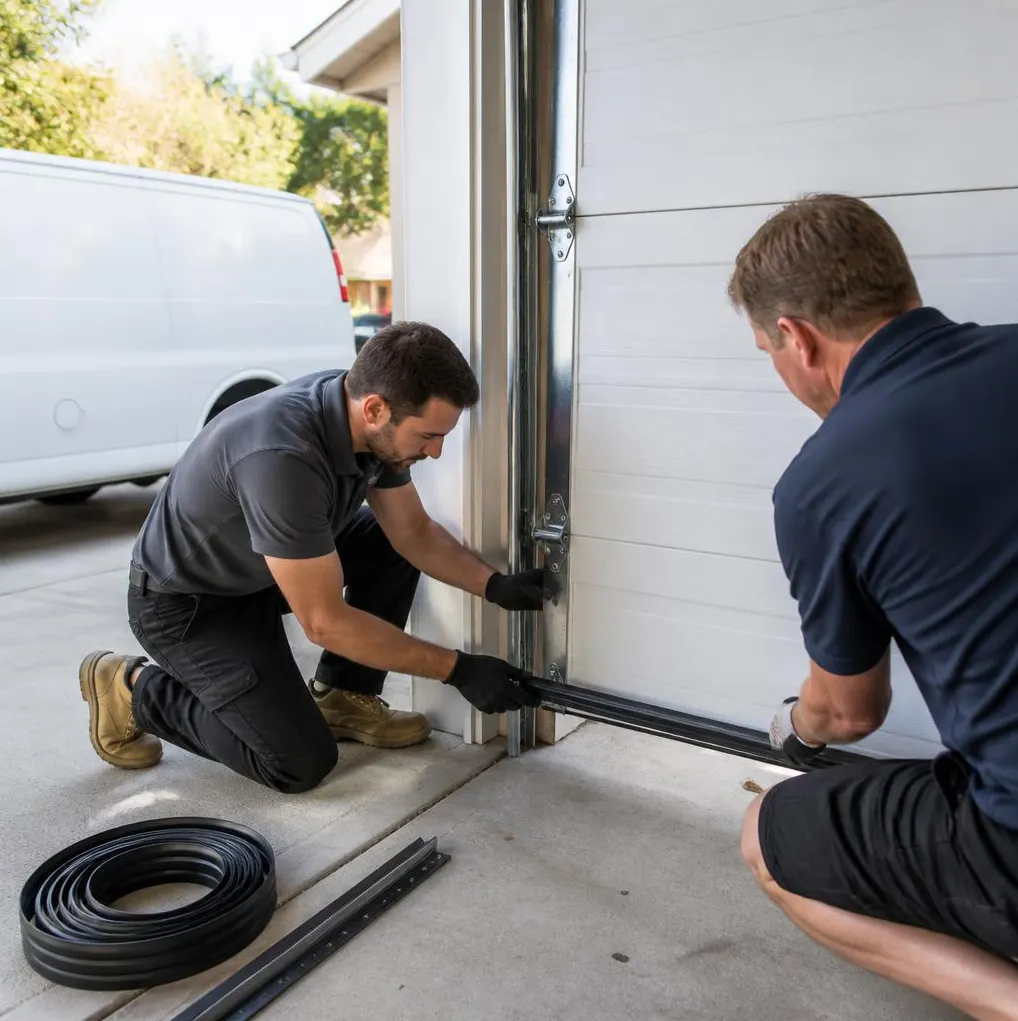
A technician pulls up to a house with an older door, and the homeowner meets them in the driveway already frustrated: the door closes halfway, stops, and rattles back up every single time. Or it won't close at all, and the opener light just blinks. Nine times out of ten, the fix isn't the opener, the springs, or the panels. It's a pair of small plastic eyes mounted a few inches off the garage floor, and something has gotten between them or knocked them out of true.
What the Photo-Eye Sensors Actually Do
Every garage door opener built in the last few decades has two small sensors mounted near the bottom of each track, usually four to six inches above the floor. One sends an invisible infrared beam across the opening; the other receives it. As long as that beam is unbroken and the two units are aimed squarely at each other, the door is free to close. Break the beam, or knock either sensor out of alignment, and the opener refuses to close the door or reverses it mid-travel. That's the system working correctly, not malfunctioning.
Why They Trip So Often Around Here
In this part of Lancaster County, a few local realities make photo-eye problems more common than in milder climates:
- Road salt and winter grime. Tires and boots track in salty slush all winter, and it ends up splashed or dripped right onto the sensor lenses, fogging the beam.
- Freeze-thaw movement. Repeated freezing and thawing can cause slight shifts in a concrete slab or the track brackets bolted to it, nudging a sensor's aim off just enough to break the beam.
- Humid summers. Condensation can build on the lenses or creep into the wiring connections, especially in garages that aren't well sealed.
- Nor'easters and wind-blown debris. Leaves, cobwebs, and dust get pushed into garages during storms and settle right on or in front of the sensor lenses.
- Older housing stock. Many original garage doors in this area still have older sensor brackets with looser mounting hardware, or wiring that's been nicked, pinched, or chewed by rodents looking for warmth in the cold months.
- Low winter sun angles. Direct sunlight hitting the receiver lens at a low angle, especially late afternoon in the colder months, can confuse the sensor into a false reading.
How Badly This Can Go Wrong
The reversing feature exists because garage doors are heavy, and a misaligned or disabled sensor removes the one thing standing between a closing door and whatever is in its path. That could be a car bumper that sticks out a few extra inches, a pet, a kid darting through, or a snow blower left in the doorway. When sensors get bypassed or ignored, the door simply closes on whatever is there. This isn't a hypothetical risk category to shrug off; it's the entire reason the sensors were added to garage door openers in the first place.
How to Clean and Align Them Yourself
- Locate both sensor units near the bottom of each track and note which one has the small LED indicator light (this is usually the receiver).
- Disconnect opener power at the outlet or breaker before touching any wiring.
- Wipe each lens gently with a soft, dry cloth or a cloth lightly dampened with water. Avoid glass cleaners or anything abrasive that could scratch the lens.
- Check that both sensors are angled directly at each other and sit at the same height on both sides of the opening.
- If a sensor has shifted, loosen the wing nut or bracket screw, adjust the angle slightly, and retighten. Restore power and watch the indicator light for a steady glow, which usually signals good alignment.
- Inspect the wiring along both tracks for nicks, chew marks, or moisture damage, and clear away any cobwebs, stored tools, or hanging items blocking the beam path.
- If low sun is hitting the receiver at certain times of day, a small shade or visor over the sensor can solve it without needing to relocate anything.
When Not to Bypass Them
Some older openers have a manual bypass switch for the safety sensors, and it can be tempting to flip it just to get the door closed on a frozen morning. Don't. Taping a beam closed, forcing the door shut with the wall button held down, or disabling the sensor circuit removes the one layer of protection the system has. If the sensors keep tripping, the goal is to find and fix the cause, not to work around it.
When to Call Ephrata Garage Door
If you've cleaned and realigned the sensors and the door still won't close reliably, the issue may be deeper, damaged wiring, a failing sensor unit, or opener logic settings that need a technician's eye. Ephrata Garage Door handles both Garage Door Opener Repair & Installation and routine Garage Door Maintenance for homes throughout Ephrata, Lititz, Akron, Denver, New Holland, Terre Hill, East Earl, and Adamstown, and can track down exactly why your sensors keep tripping before winter makes it worse.
If your garage door in Ephrata, PA is reversing, blinking, or refusing to close, give us a call and we'll get it diagnosed and working safely again.